Katherine Qiyu Su: Mountains and Rivers Will Meet Again
Incubator is pleased to present Mountains and Rivers Will Meet Again, a new body of paintings by Katherine Qiyu Su made between mid-2025 and early 2026.
At the centre of the exhibition is a single word: 执念 (zhì niàn). Untranslatable into a single English word, it holds obsession, longing, and attachment together – a thought or feeling one refuses to release, even when release might bring peace. In Chinese storytelling, a character's zhì niàn can shape their destiny or bring about their undoing. Su takes it as both her subject and her method.
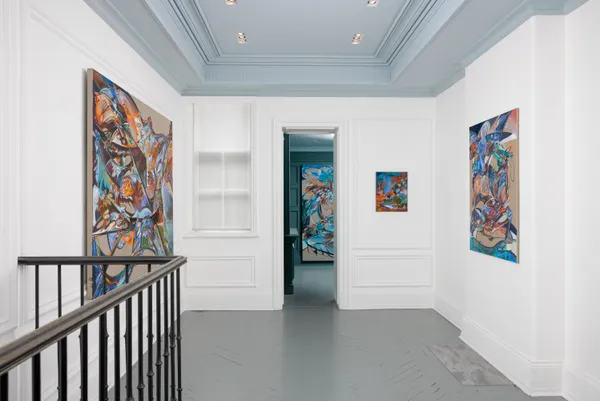
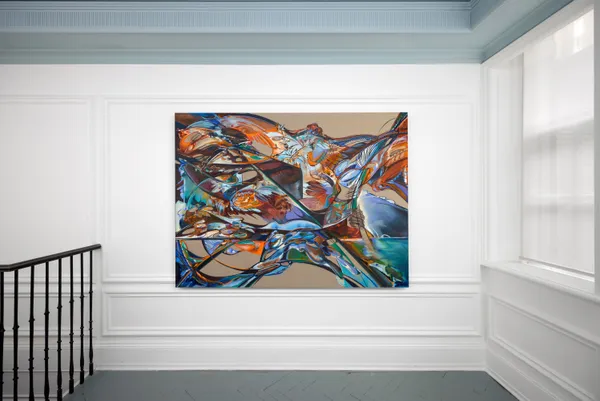
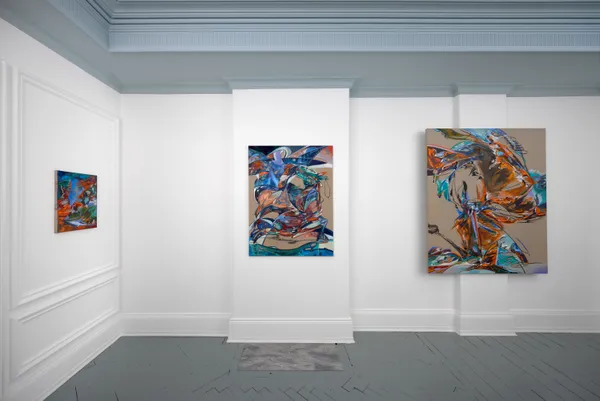
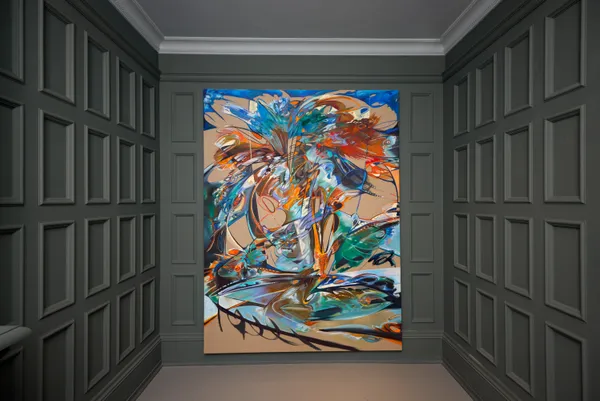
Her paintings have a whirling energy. Bodies, nature, and architectural forms are fragmented and reconstructed, suspended within unstable spatial fields where cities tilt, horizons invert, and motifs recur. The work oscillates between abstraction and figuration, past and present, as though each image has been exposed twice. Negative space is not emptiness but a generative force, governing what can be seen and what remains withheld. Drawing on sutra paintings and mural fragments, Su pursues colour combinations that are deliberately unharmonious: colours that resist one another, and yet hold.
The work was made during a period of sustained uncertainty, and it is quietly preoccupied with what gets lost in an age of constant stimulation – how nostalgia fades under the weight of endless input, and how the feelings that should endure are so easily overwritten. Su's own losses are present but never stated directly. The dry cold of northern winters haunts her from afar. A grandmother's apartment, long since emptied and reclaimed, surfaces in the way she paints space: the subject defining the room around it, the environment blurred and held at a distance. Painting, for Su, is a way of giving these presences material form so they no longer depend on her remembering to exist.
The title, Mountains and rivers will meet again, is an expression of hope across distance and time, addressed as much to people as to places, memories, and feelings once set aside. In that private experience of dislocation, Su finds something others will recognise: an emotional ground that is shared, even across entirely different lives, geographies and times.